
Article
Japanese contentWhat should you use instead of SocialBee? A practical guide for X AI drafting and Japanese workflow speed
Operators and small teams comparing SocialBee against faster X-first drafting workflows / Published: 03/26/2026 · Updated: 03/26/2026
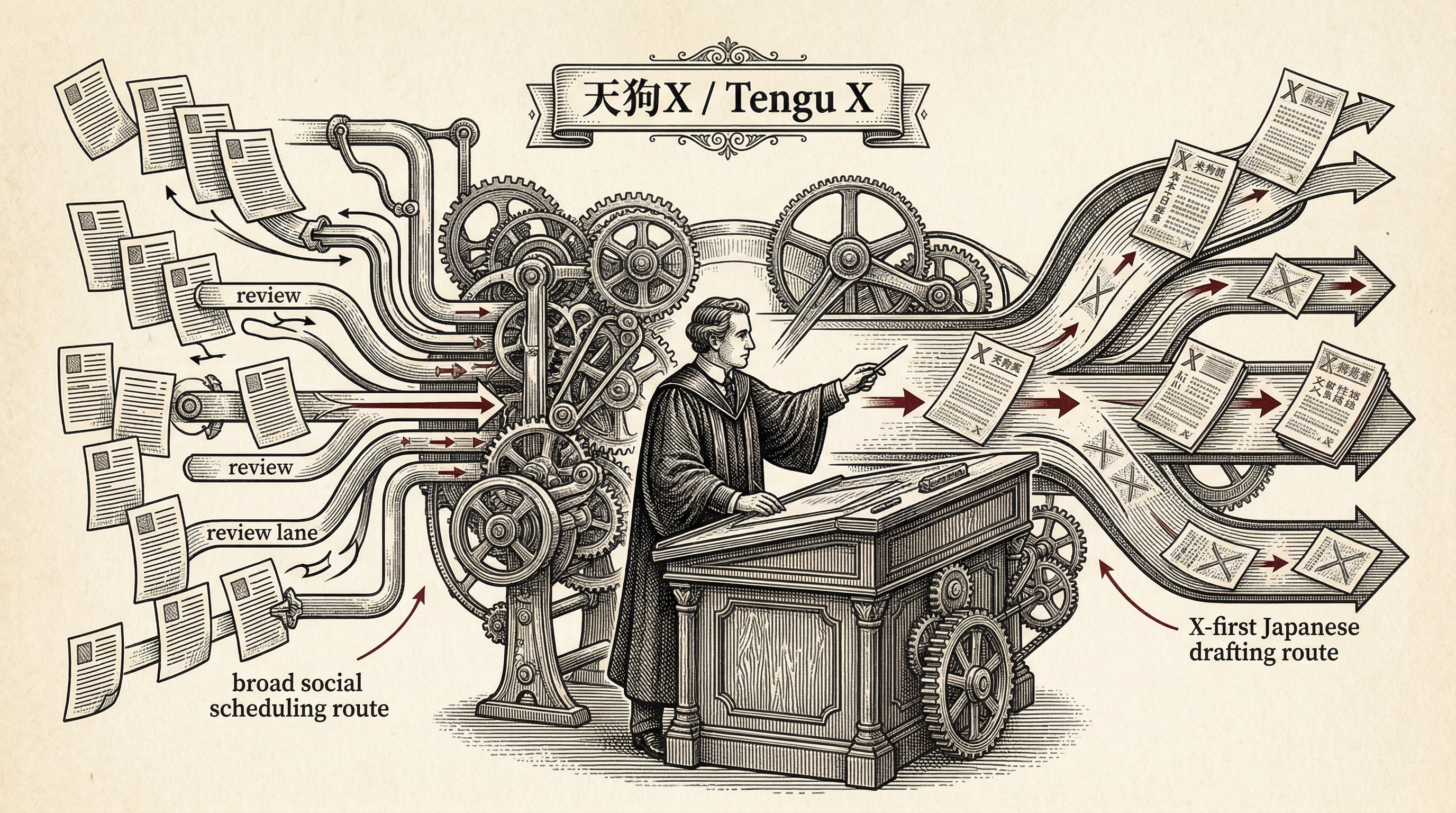
This article is currently available in Japanese.
The article UI is localized, and English article content is being added progressively.
When teams look for a SocialBee alternative, the real question is usually not feature count. It is whether the team can move from AI-assisted drafting to approval and queue-ready X posts faster, especially in Japanese workflows.
As of March 26, 2026, SocialBee's official pricing, features, and X help pages still position it as a broad multi-network operations tool with X support, AI-assisted post creation, collaboration, approval, and workspace management. That makes it a serious baseline. But X-first teams should still compare it through a narrower operational lens.
The four comparison questions that matter most are:
- how X-first the workflow really is
- how strong the Japanese draft shaping step is before approval
- whether approval should be formal or intentionally light
- whether the team needs reusable multi-network categories more than weekly X execution speed
If you want the broader map first, start from /articles/compare and the existing X tool comparison guide.
Bottom line: choose based on X-first momentum, not only platform breadth
SocialBee makes sense when your team wants a broad social operations layer with reusable categories, collaboration, and approval inside one system.
Alternative evaluation becomes more important when:
- X is the main channel and Japanese draft quality has to improve before review
- approval should happen after the draft is already strong, not as a heavy rewrite stage
- search, quote, and reply workflows matter more than broad category recycling
When SocialBee still makes sense
1. Multi-network reuse matters
If the same operating system needs to support multiple social networks, category-based reuse still makes SocialBee attractive.
2. Workspace and approval structure matter
If role separation, client separation, and formal review steps are part of the operating need, SocialBee stays in the comparison set for good reason.
3. AI is a support layer, not the main production edge
If AI help matters but the team is not optimizing for Japanese X-specific throughput, SocialBee can still be a fit.
Signals that you should compare alternatives
Drafts reach review before they are ready
Approval features do not solve weak draft prep. If draft quality is still low before review, pair the comparison with the existing approval bottleneck guide.
The search-led X workflow is the real bottleneck
If your team depends on finding strong X inputs and turning them into usable Japanese drafts, the right comparison should move upstream. The operating path in the published search to reply queue workflow and the new approval to queue handoff workflow is more relevant than a broad feature list.
Multi-network criteria are hiding an X-first problem
If X is your main growth surface, broad platform coverage can distort the comparison. You need to measure forward movement inside the X workflow.
Four useful lenses for a SocialBee alternative comparison
| Lens | SocialBee tends to fit better when | An alternative tends to fit better when |
|---|---|---|
| X positioning | X is one channel among many | X is the main operating surface |
| AI drafting | AI support sits inside a broad workflow | Japanese X draft quality is the main bottleneck |
| Approval | review structure and roles matter most | lighter front-loaded approval is better |
| Operating model | category reuse matters over time | weekly search-to-queue movement matters more |
A 30-minute decision process
Step 1. Compare SocialBee with one X-first option only
A tight comparison works better than a long tool shortlist.
Step 2. Test one week's worth of Japanese drafts
Do not score abstract features first. Score whether the team can produce queue-ready drafts faster.
Step 3. Use four metrics
- usable draft count before approval
- number of revision loops
- scheduled posts locked by Friday
- reusable material carried into next week
Step 4. Compare the operating path, not only the UI
Check the actual buying path as well by pairing the workflow review with the pricing page.
When TenguX is an easy comparison candidate
TenguX becomes easier to compare when the team is X-first and wants to improve Japanese draft quality before the approver sees the work.
That is often true when:
- Japanese draft shaping is still heavy every week
- the team wants stronger work before review starts
- search, quotes, replies, and queue movement matter more than broad category reuse
The comparison becomes more concrete if you also inspect the template library and prompt library.
Summary
The best alternative to SocialBee depends less on raw breadth and more on whether your X-first workflow moves faster with better draft quality.
- keep SocialBee in the mix if multi-network management and structured collaboration matter most
- compare drafting-first options if Japanese X throughput is the real constraint
- if approval is still heavy, fix the approval line together with the tool decision
Test one week of work and compare usable draft count and Friday queue completion. That gives a much better answer than a longer feature checklist.
Resources
Related resources
Use these templates and references to apply the article workflow directly in your own operations.
Next action
If you want to try this flow yourself, start by creating draft ideas for one theme.