
Article
Japanese contentHow to turn @handle search into Japanese rewrites and queue-ready drafts in TenguX
Operators who can find strong reference accounts but struggle to turn @handle research into Japanese queue-ready drafts / Published: 03/25/2026 · Updated: 03/25/2026
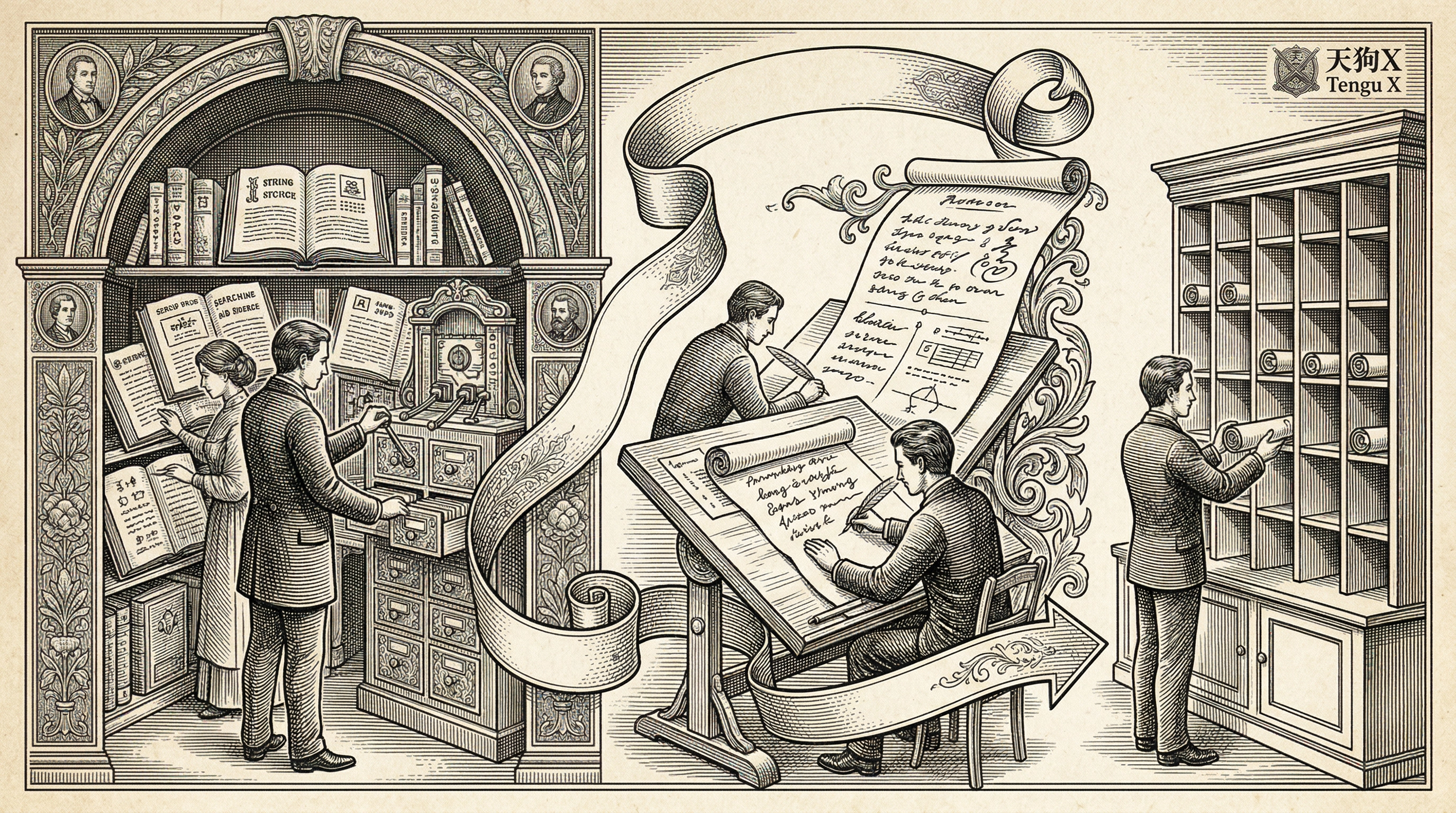
This article is currently available in Japanese.
The article UI is localized, and English article content is being added progressively.
Finding a strong account is not the same as creating usable drafts from it.
Many teams use @handle search like this:
- open a strong account
- read several posts
- notice that the account feels consistent
- fail to turn that observation into a Japanese draft or queue decision
This guide explains how to use TenguX @handle search as an execution workflow rather than passive research.
Bottom line: the goal of @handle search is to choose one reusable pattern for this week
The useful number is not how many posts you read.
- how many posts were enough to describe one clear pattern
- how many Japanese draft candidates came from that pattern
- how many became queue-ready this week
If the team only observes, the workflow is still stalled.
Why @handle workflows usually stop
1. The team studies posts one by one instead of extracting a pattern
The value of @handle search is not a single post. It is the repeated structure you can see across several posts.
2. Audience conversion happens too late
A strong account still speaks to a specific audience. If you do not define your own reader, point, and CTA before rewriting, the result becomes muddy.
3. There is no queue rule
Even if the pattern produces decent drafts, they still stall if nobody knows which one deserves a queue slot this week. That is the same operational problem covered in the published saved ideas to queue workflow.
How this differs from link input
Link input works best when one source post gives you a strong starting point.
@handle search works best when you want to learn the broader pattern behind a strong account.
The published link input vs. @handle search guide is the right companion if your team still mixes those two use cases together.
A practical three-step workflow
| Stage | Goal | Done when |
|---|---|---|
| Handle | choose one account to study | one repeated pattern is written in a single line |
| Rewrite | reshape that pattern for your audience in Japanese | audience, point, and CTA are locked |
| Queue | decide what deserves this week's slot | at least one draft is queue-ready |
The key is to keep observation and drafting in the same flow.
Step 1. Review only five posts and write one pattern sentence
You do not need a huge sample. Five posts are enough if you can name the pattern clearly.
For example:
- starts from a failure point
- adds one concrete example
- keeps the CTA in the final line only
That sentence becomes the input for your rewrite.
Step 2. Rebuild the pattern for your own reader
Lock these three things before writing:
- who this is for
- what one point it should make
- what the next action is
If the output still feels copied or too polished, the published copy smell fix guide is the right companion for the tone layer.
Step 3. Create only three drafts from the pattern
Do not try to squeeze too much from one account pattern on the first pass. Three is enough:
- publish this week
- save for next week
- hold
That keeps the workflow light enough to repeat.
Step 4. Use a queue rule, not instinct
Only move a draft into this week's queue if it:
- does not overlap with another active theme
- reads naturally in Japanese
- has one clear CTA
- connects to a real reader problem
If you need the broader handoff after drafting, pair this with the published search-to-rewrite-to-queue workflow.
A 15-minute weekly routine
First 5 minutes: pick one account
Look at five posts and capture one repeated pattern.
Middle 5 minutes: write three Japanese draft candidates
Lock audience, point, and CTA before polishing anything.
Final 5 minutes: choose one queue-ready draft
Send forward only the candidate that feels distinct from this week's other themes.
Summary
@handle search is most useful when it produces one reusable pattern and one queue-ready draft, not when it produces endless notes.
- study only enough posts to name one pattern
- define audience, point, and CTA before rewriting
- move only one clearly differentiated draft into the queue
If you do only one thing this week, pick one account, read five posts, and write the repeated pattern in one sentence. That usually turns observation into actual draft movement.
Resources
Related resources
Use these templates and references to apply the article workflow directly in your own operations.
Next action
If you want to try this flow yourself, start by creating draft ideas for one theme.