
Article
Japanese contentHow to fix X quote posts that read like summaries
X operators who want to quote strong posts but keep sounding like they are summarizing them / Published: 03/17/2026 · Updated: 04/09/2026
This article is currently available in Japanese.
The article UI is localized, and English article content is being added progressively.
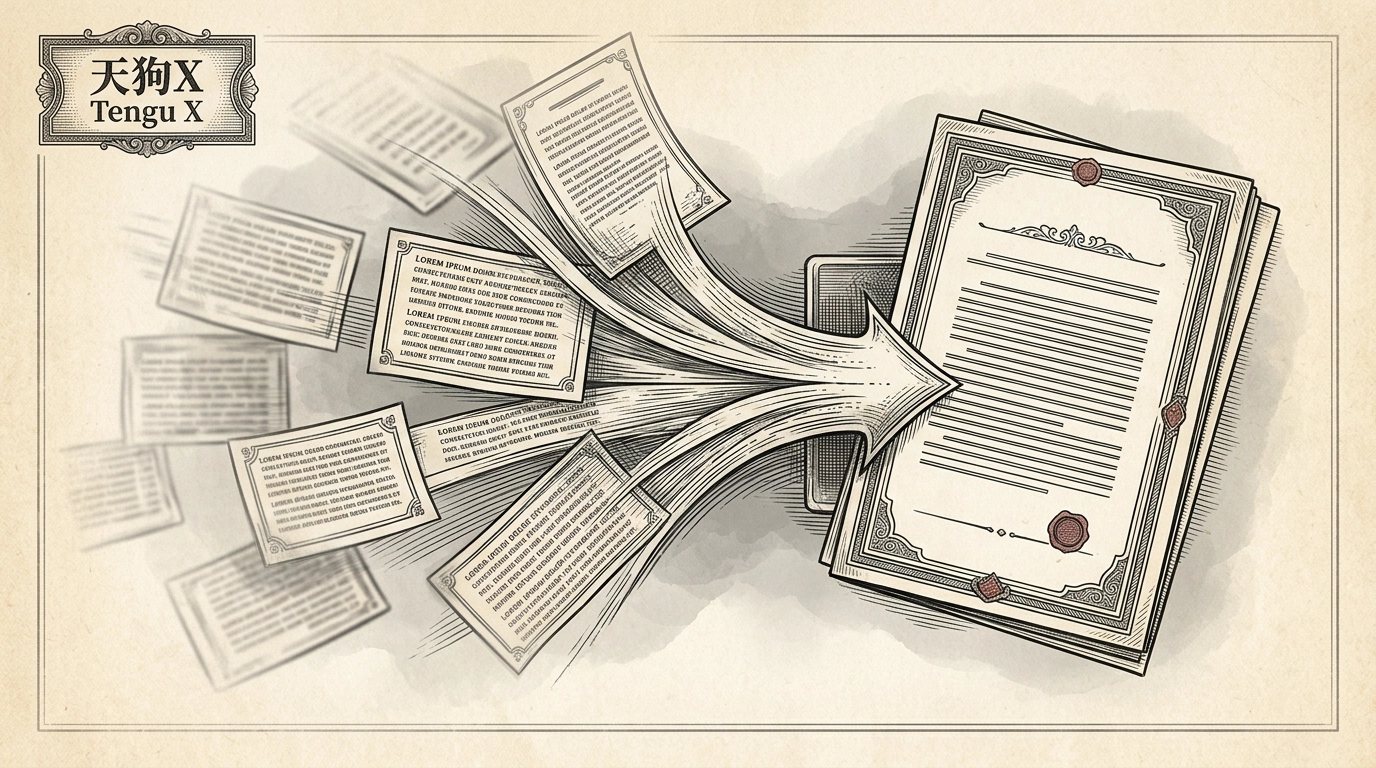
If your quote posts get weak responses, the issue is usually not that you quoted someone. The issue is that the post reads like a compressed summary of the original instead of a visible point of view.
This guide focuses on five fixes that move quote posts from "summary mode" into "interpretation mode." If you want the broader maintenance set around this topic, use the full /articles/guides hub.
Bottom line: a quote post needs added meaning, not a restatement
Weak quote posts usually do one of these:
- restate what the original post already said
- hide the writer's own position
- leave the reader with no reason to care
Stronger quote posts usually do one of these instead:
- add a field note
- narrow the audience
- add a warning
- turn the point into a next action
Where this guide fits
This guide is specifically about quote posts where the writer has not yet added enough interpretation.
It is the right guide when:
- the opening line restates the source instead of framing your angle
- the quote hides what you agree with, disagree with, or want to add
- the draft tries to hold the quote and the follow-up reply in one block of copy
If the whole draft feels artificial, use /articles/x-copy-smell-fix-guide-2026 first. If the main issue is how the first reply carries the follow-through, use /articles/x-first-reply-stall-fix-guide-2026.
Why quote posts fall into summary mode
1. The opening line does not signal what is being added
If the opening line simply explains the original post, the reader feels they could have learned the same thing from the source itself.
2. There is no visible angle
Every quote post needs at least one clear job:
- add practical context
- add a counterpoint
- add a more specific example
- reinterpret the advice for a narrower reader
Without that, the quote becomes commentary without value.
3. The post tries to do too much at once
When the quote tries to explain everything, it becomes long, flat, and summary-like. The cleaner move is to keep one message in the quote and push the extra detail into the first reply.
Five ways to fix it
1. Start with your position, not your agreement
Instead of:
- this is so true
Try:
- for a small team, this matters less as an approval problem and more as a draft quality problem
That single shift makes the post feel authored instead of repeated.
2. Expand only one thing
Pick one expansion path:
- practical example
- warning
- reader-specific rewrite
- next-step instruction
If you try to do all of them, the quote turns back into explanation.
3. Make the opening line carry the difference
A short opening is enough if it establishes the angle:
- this flips in a small-team setup
- the real bottleneck is earlier than this
- Japanese X changes the tradeoff here
If the copy still feels generic, pair this with the draft-quality cleanup advice in /articles/x-copy-smell-fix-guide-2026.
4. Keep one message in the quote itself
A quote post is not a full article. Keep a single point alive and let the rest go.
5. Use the first reply for overflow
The first reply is the right place for examples, evidence, or the follow-up CTA. That keeps the quote cleaner and more conversational.
Three structures that work well
Field-note structure
Add a practical lesson from real operation.
Audience-shift structure
Explain who this advice fits and who it does not.
Next-step structure
Turn the original idea into a clear next move for the reader.
These structures work especially well when the source post was found through the process described in /articles/x-search-method-winning-themes-en.
A practical TenguX flow
- Find a strong source post in
/search - Decide in one line what you want to add
- Generate the quote draft from that angle
- move any long explanation into the first reply
- send only the strongest version into the queue
Use /resources/hooks to widen the opening-line options, /resources/templates to compare interpretation patterns, and /resources/prompts when the team needs a repeatable drafting prompt.
That operating flow fits naturally with /articles/feature-search-to-rewrite-queue-workflow-2026-en.
Common failure patterns
- shortening the source post instead of adding to it
- hiding the writer's own position until the end
- cramming the CTA into the quote itself
- forgetting to use the first reply as overflow
Summary
Quote posts feel summary-like when the writer starts from explanation instead of interpretation.
- show your position early
- expand only one angle
- keep one message in the quote
- move extra detail into the first reply
For ongoing use, pair /resources/hooks, /resources/templates, and /resources/prompts, then use /priceplan to check rollout conditions if the team wants to operationalize the workflow. The closest sibling guides are /articles/x-copy-smell-fix-guide-2026 for draft quality and /articles/x-first-reply-stall-fix-guide-2026 for reply follow-through.
Resources
Related resources
Use these templates and references to apply the article workflow directly in your own operations.
Next action
If you want to try this flow yourself, start by creating draft ideas for one theme.